While karst and caves in eastern Canada, especially the Maritimes, are not as extensive as some western provinces, both are present and offer great opportunities for exploration. In New Brunswick, there are a number of fine but relatively small caves in both limestone and gypsum. A good source of information on caves in the province is probably the 1997 report by Arsenault et al., but there have been a number of accounts over the years in The Canadian Caver, both the regular magazine and in the 1976 hard-copy special issue. The underground fauna of New Brunswick is better studied than many other cave areas in Canada owing to work by Don McAlpine and Max Mosely over a number of decades
(see: http://www.cancaver.ca/bio/caninverts.htm). For a number of years, Eric Hendrickson, a caver from the nearby state of Maine, made many trips to caves in the province which were reported in his NSS grotto newsletter and occasionally in The Canadian Caver.
With an unexpected death in my family, I was on a trip back to my home province of New Brunswick – my 3rd in about 14 years. Although I now live in BC, my teen years were spent exploring the amazing caves and karst of New Brunswick. This had been purely touristing, without any surveying or scientific work, so I brought my disto and see if I could add to the collection of surveys. There’s little mapping currently happening in the area and also no pushing exploration of tight caves, so lucky me! What follows here is a bit of a chronicle of cave visits and mapping conducted in May/June 2023
Deadman’s Cave
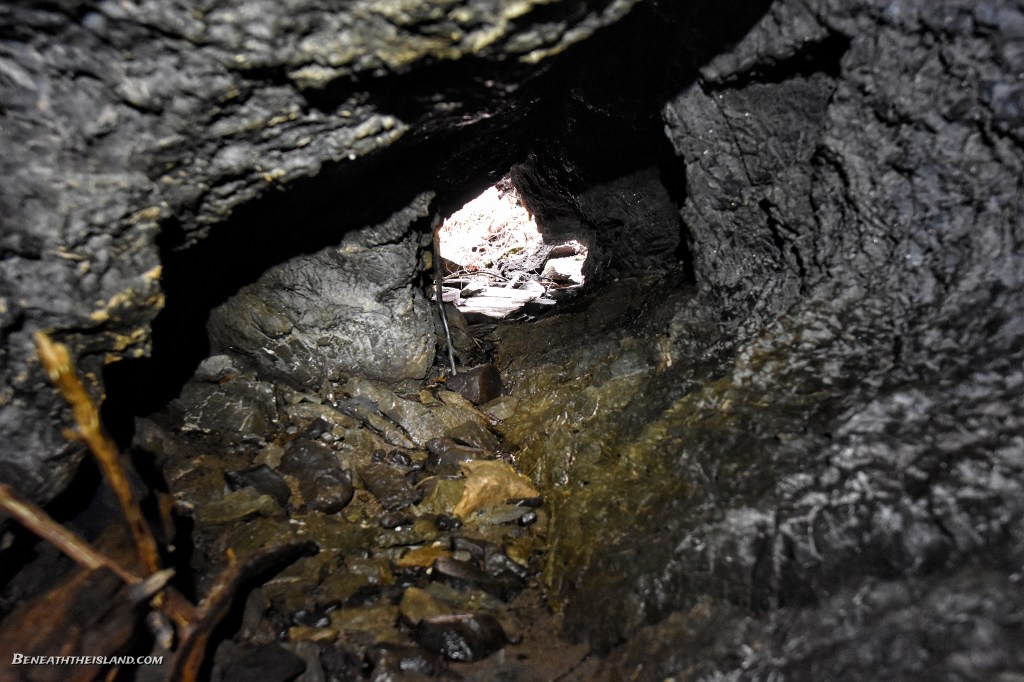
On my first day back, I visited Deadman’s Cave, one of my favorites. In my 14 year absence, absolutely nothing had changed. The cave is named for the body of a hunter who was found deep inside long before I started caving. I contacted my good old friend Fraser Day who came right over to help. We surveyed the cave to a total length of 41.2m and depth of 1.8m. Afterwards we explored lots of small sinks and grykes in the vicinity but didn’t find anything substantial.
Kitts Cave
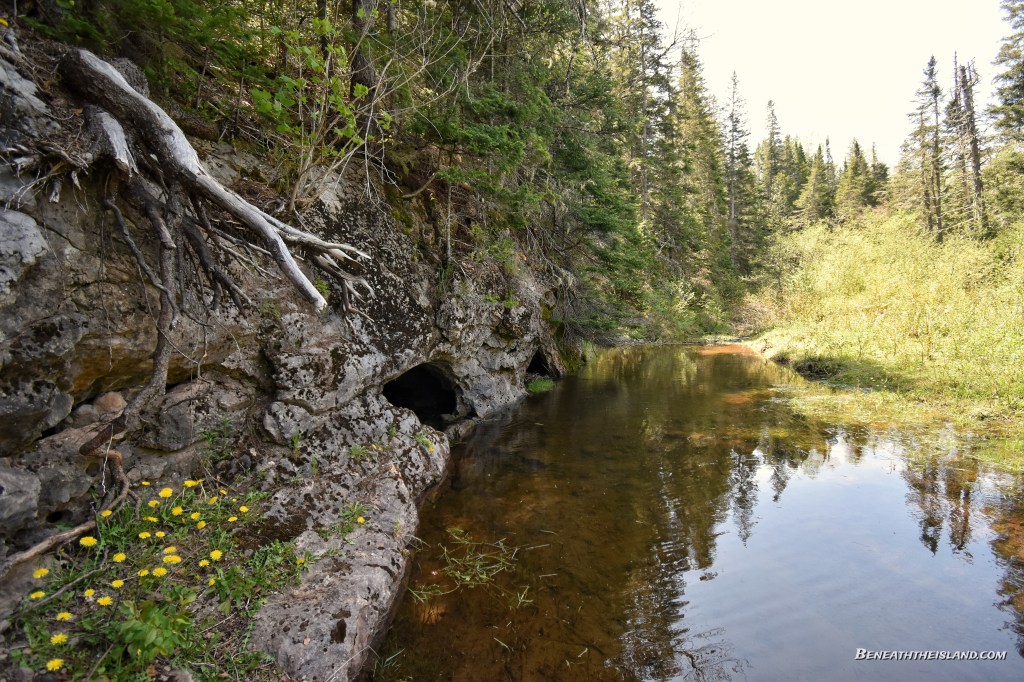
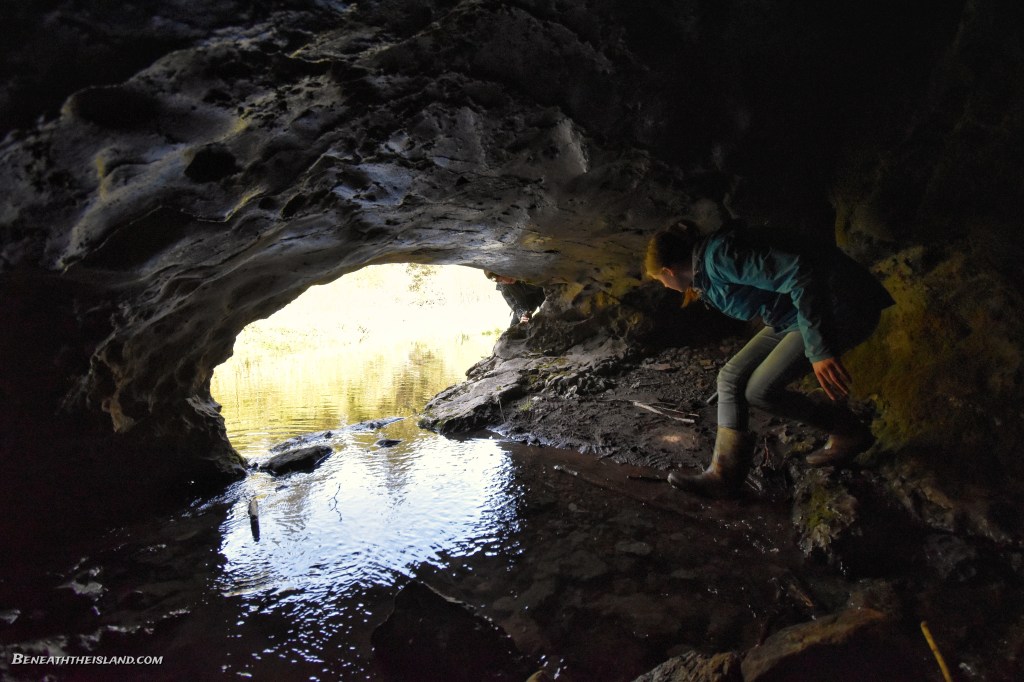
My nephews and niece joined me for a caving trip to Kitts Cave (a.k.a, “Kitty Cave’), so-named for the annual beaver den built inside the cave. There have been a couple of articles about the cave in The Canadian Caver (5/2:37, 29/1:30) and a fine scientific article about the non-beaver fauna in the cave.
The trail was a bit more difficult than I remember and William, Benjamin and Estella made me look old when they climbed effortlessly down the cliff. We worked our way into the cave and though it was water-filled, they easily made their way across without falling in the pool from the boulders we placed to step on. Inside the cave, I showed them all the passages that didn’t involve getting extremely muddy.
Ol’ Crawly Cave
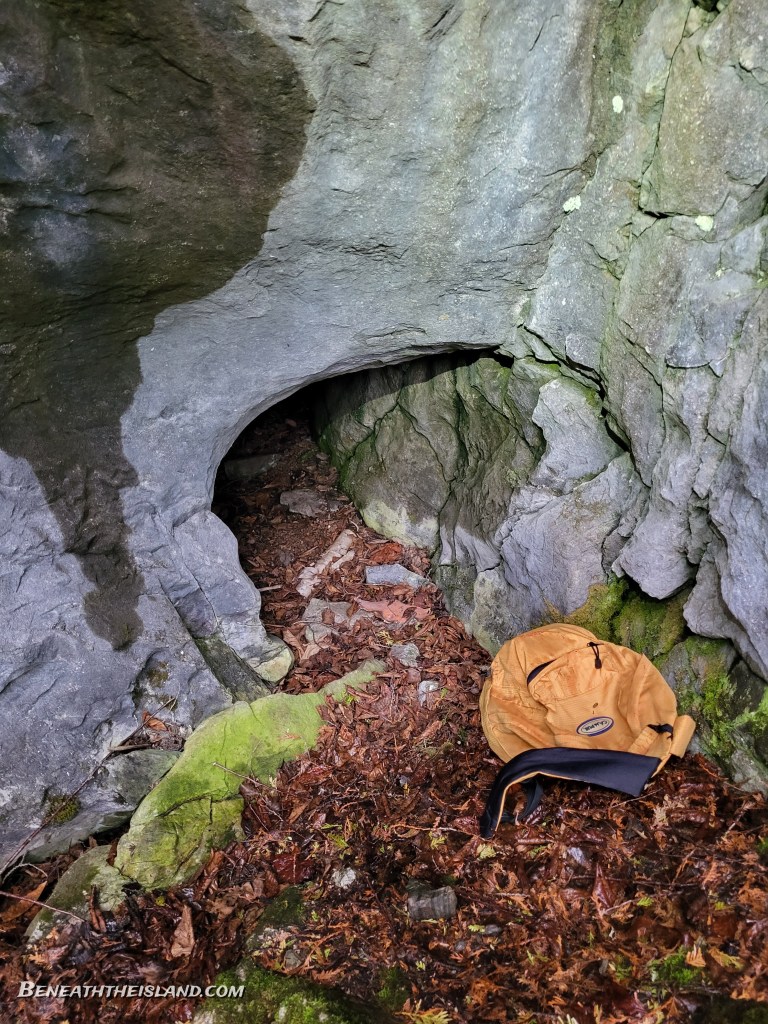
It had been a few years since I had seen my good friend Andrew Hodge and thought I’d drag him into a wet, dark, cold, tight, spider-filled hole in the ground. He was completely into it so we pushed our way down a small entrance in Saint John. With the number of rocks we had to move, it seemed like nobody had ever been down there and we surveyed it to a total of 25.2m and 1.7m deep. The cave had too much water to continue but definitely goes. I had to use a stick to break through the Indiana Jones-like cobwebs blocking the path. We called this cave OI’ Crawly Cave.
About 10m away is the entrance to Ol Cave, which I had visited with my brother and friends many years ago. I remembered the passage being blocked with a live porcupine and the sound of monkeys and lions coming from the now-closed zoo – definitely the only time I’ve heard these sounds near a cave! Inside the cave we were assaulted by the horrible smell of death, but we could not find the source. We surveyed our way into an extremely tight crack which I felt was too small for me. This cave, in my opinion, awaits a smaller explorer!
Downstream we found and surveyed 2 really small tight water-filled caves we named Tight OL’ Cave for obvious reasons and Flakey OL’ Nymph Cave due to the flakes of limestone breaking off at the entrance and the three aquatic nymphs identified in this section of the Owen Lake System.
Howes Lake Cave and Rockwood Park
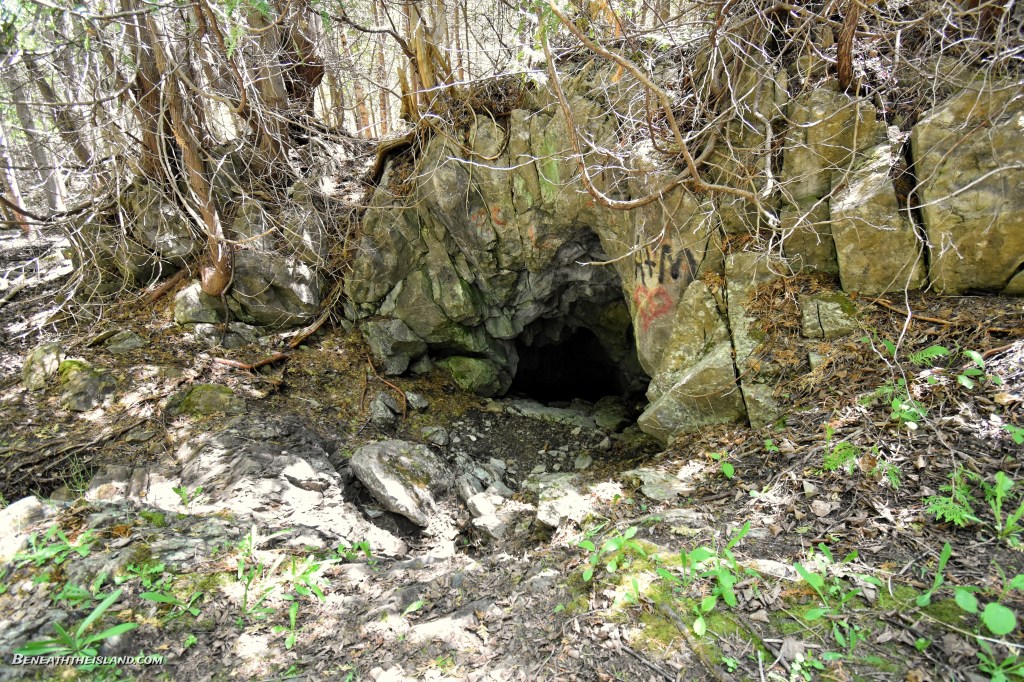
From my hotel window I could see across some blasted limestone bluffs and thought “there must be caves in there!” Unfortunately there weren’t, but there was a nearby section of Rockwood Park where I remember finding a pit entrance. I hoofed my way out to the area, but unfortunately there is a now an
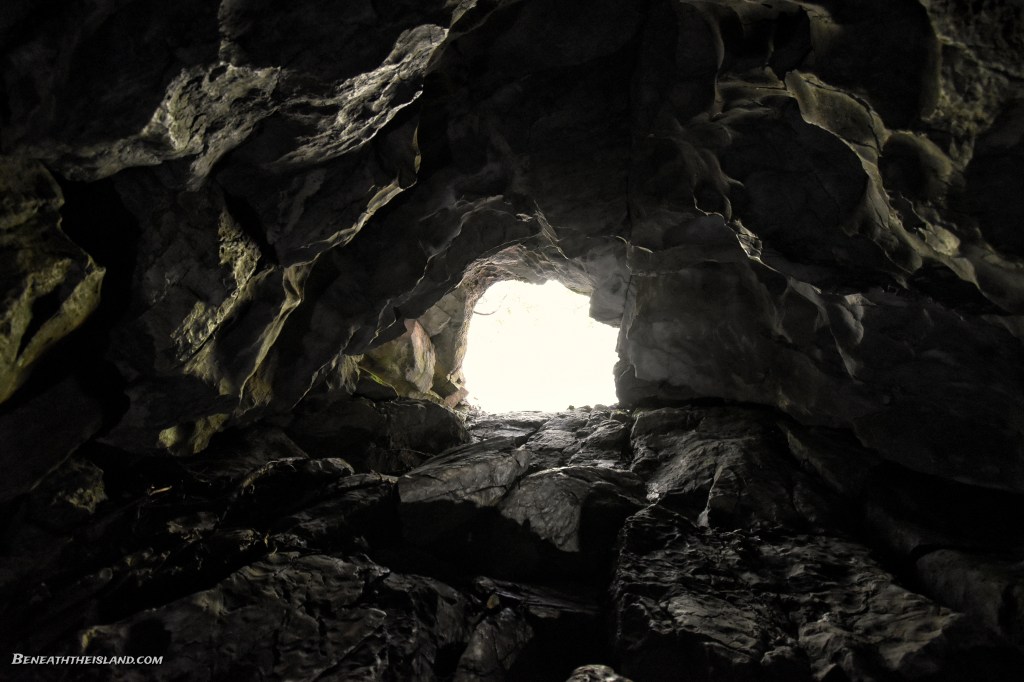
LNG pipeline, built just before I left New Brunswick and that seemed to pass directly over the cave and blocking the entrance The whole area is full of swiss cheese-like karst mostly grykes and extremely small holes. I weaved in and out of small marshes littered with hundreds of holes before popping out at the prominent entrance of Howes Lake Cave. Howes Cave is well known, and has even been covered in a few past articles in The Canadian Caver (8/1:28; 29/1:30) and the 1976 special issue as well (Moseley 1976). Unfortunately, as a consequence of the popularity, cave is heavily vandalized and has been for a long time. On one of my past trips the trash in the crawls was so bad I was picking broken light bulb glass out of my elbows for about a year!
Fundy Footpath and Taber’s Cave
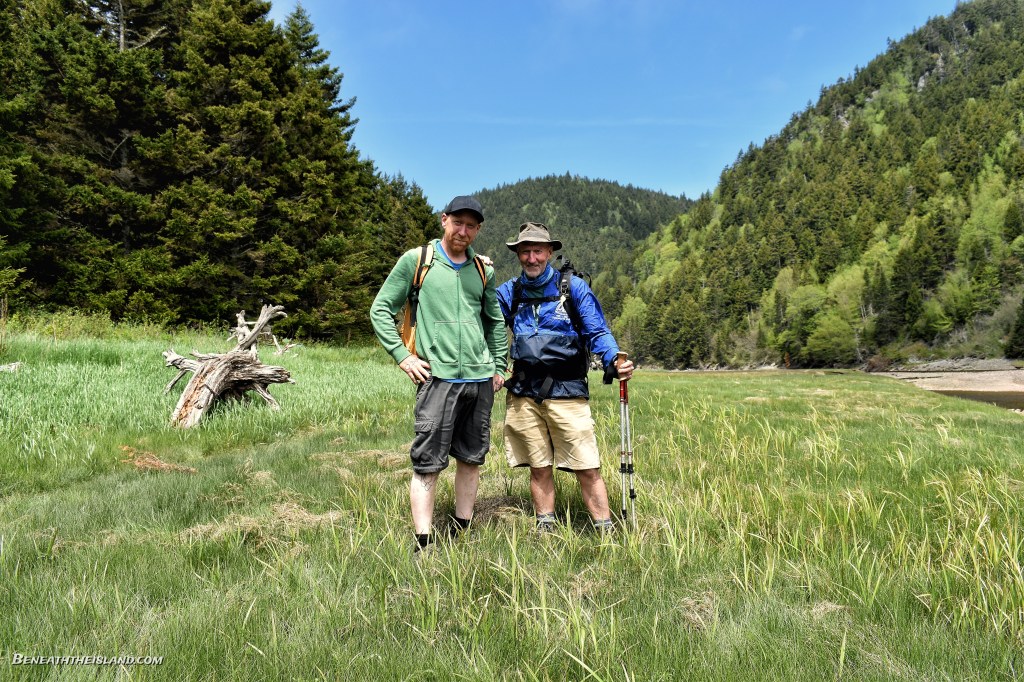
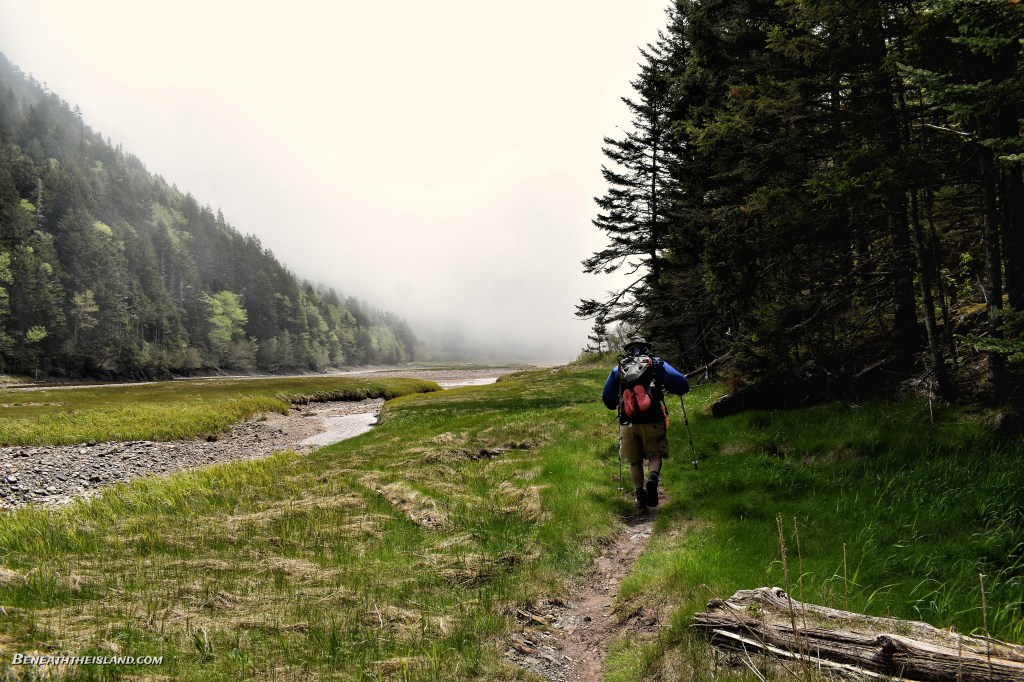
My Uncle Lloyd and I made our way out to little Salmon River and the Walton Glen Gorge, doing a total distance of about 15km. was surprised to see lots of random chunks of limestone in the woods. Makes me wonder if any cavers have ever looked in the area.
On my drive home I decided to check out a cave that had always been filled in with sand and gravel – Tabor’s cave.. It seemed to be in the exact same condition as it was last time I was there. I know next time I really want to bring a shovel because this cave seems to take a large amount of water and is drafting.
Lion’s Den and Chantel’s Cave
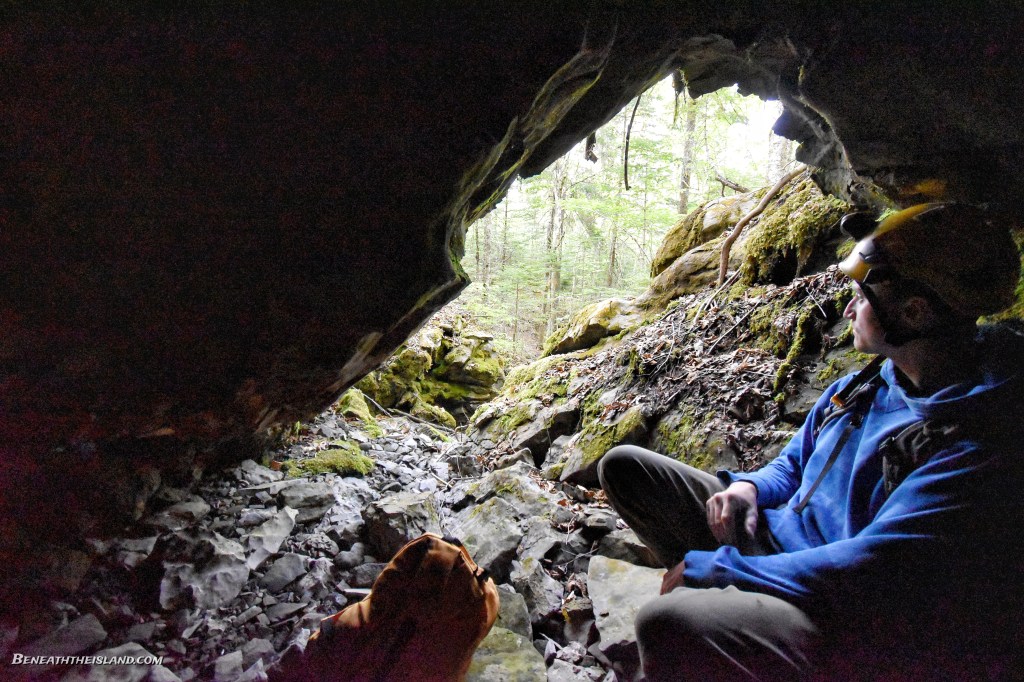
I settled on surveying Lion’s Den Cave since I thought this would be a good cave to solo survey as there are really no dangerous points This is the first cave I had ever surveyed entirely on my own. While I definitely don’t recommend ever going into the cave alone, I had many people who knew where I was and a few who were designated as call-outs. I surveyed the cave to 101.3m and could have gone further if the passage was not water-filled. There are several beautiful small waterfalls and lots of small tight, wet climbs that make this cave very fun.
When I looked at my GPS after the survey, I found I was only a couple hundred meters away from OL Cave suggesting this may be the resurgence. I decided I should do an overland survey of the entire system to tie it together to see how close the caves are, to each other.
Later that day I met up with Fraser again and we hiked to Chantel’s Cave in Upham. The cave was more fun and extensive than I remembered and has a through trip in one section and the other section crawl ways that get too tight to continue. I believe this cave is about 100m long but we did not do a survey as it likely has one already.
Glebe Mine
I had remembered doing a hike to mine near Sussex with my friend Erica years ago. I thought this would be a great one to bring my brother and his family to do a little exploration:
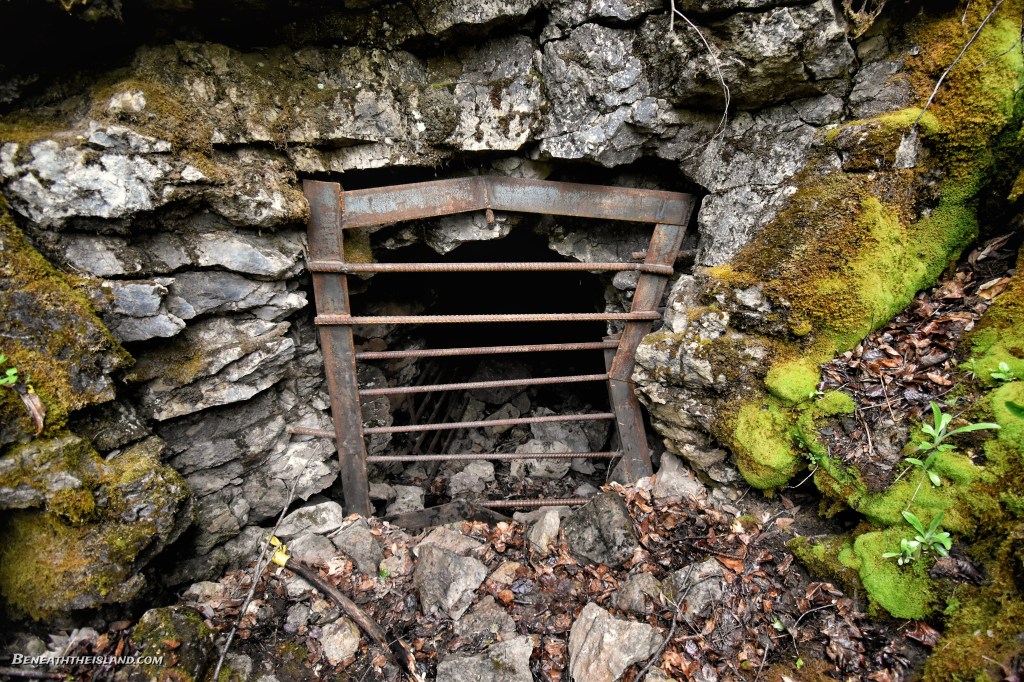
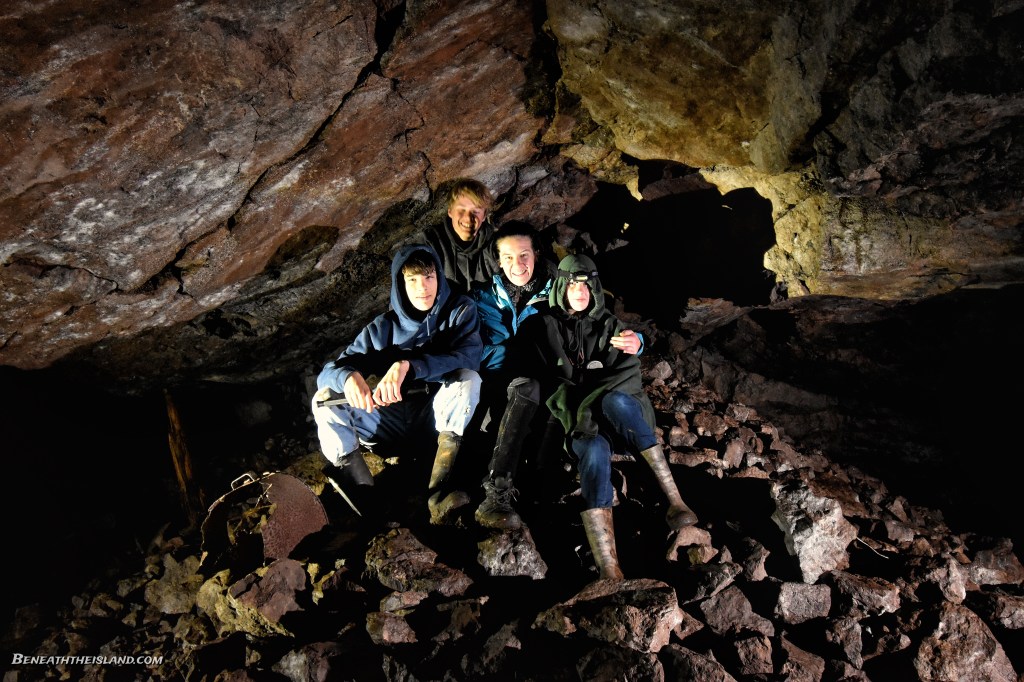
We found the mine in the same spot I remembered although the nearby Glebe Pot had been filled in. However, the mine shaft itself was gated but they did not know they were dealing with cavers. We all contorted our bodies and slid between the bars.
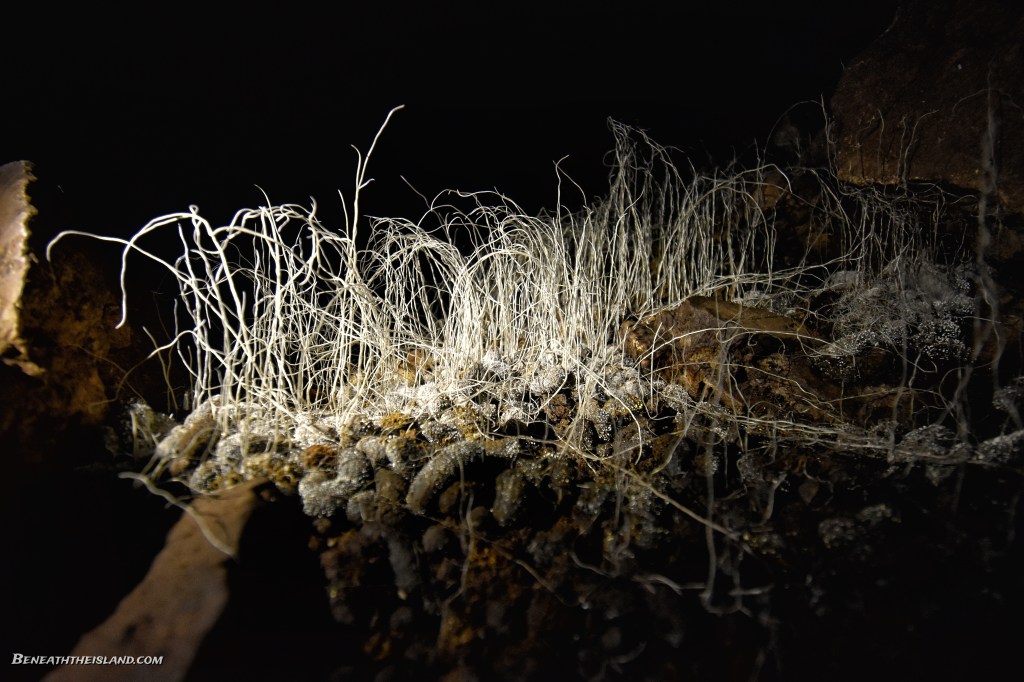
Inside the mine is a maze of random passages. There were porcupine feces everywhere and had really interesting plants growing out of it. I’m guessing the porcupines were eating seeds that sprouted and grew oddly underground due to the lack of sunlight. There are a few collapses but the mine is otherwise safe.
OL Cave Again
I woke early on the last day of my trip and I could not stop thinking about the question marks on my survey around OL Cave. I had found an entrance that looked like it could continue with a little digging so I grabbed my shovel, drove to the cave and dug my way in. It was very exciting because it opened up right away into standing-height passage but after just 11m came to an abrupt end. I surveyed and called this OL’ Dig Cave.
Once out of OL’ Dig Cave, I called my buddy Colin Jarvis and he dropped everything to come meet me and survey some really tight passages. We went to the squeeze which I had opted not to do in the OL Cave. I let out a good exhale and squeezed through nicely down into a good-size passage with lots of room to turn around. Coming back up was a little difficult as the slope was all small rocks but not as bad as I expected.
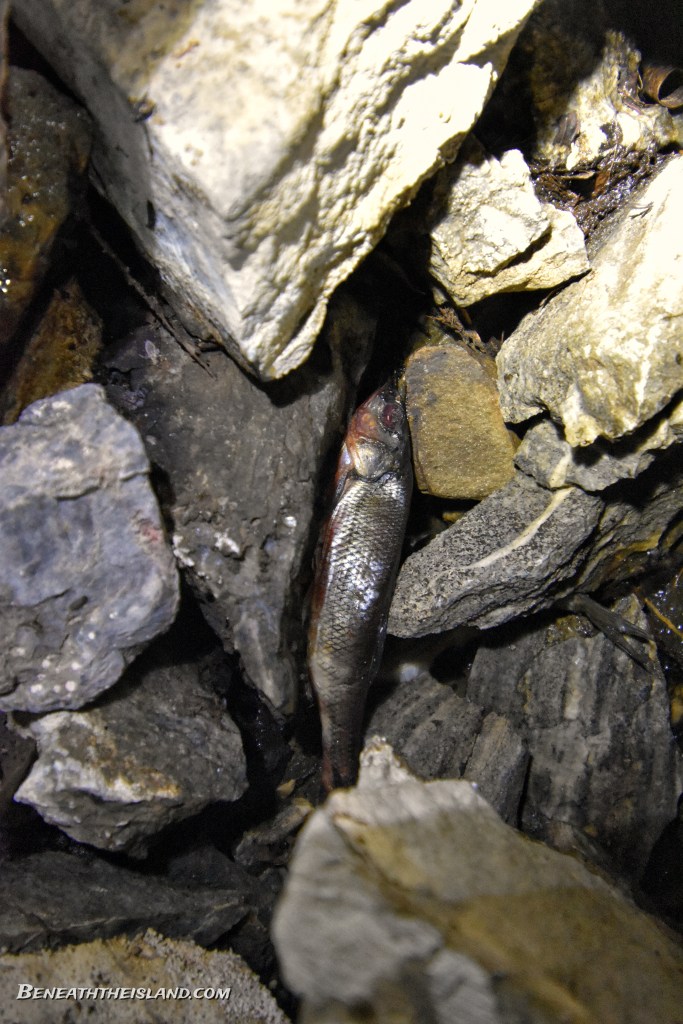
On the way out of the cave I had finally located the source of the terrible smell at the entrance. There were several dead fish under the rocks. There must be a lot of water flow through this system in the Spring.
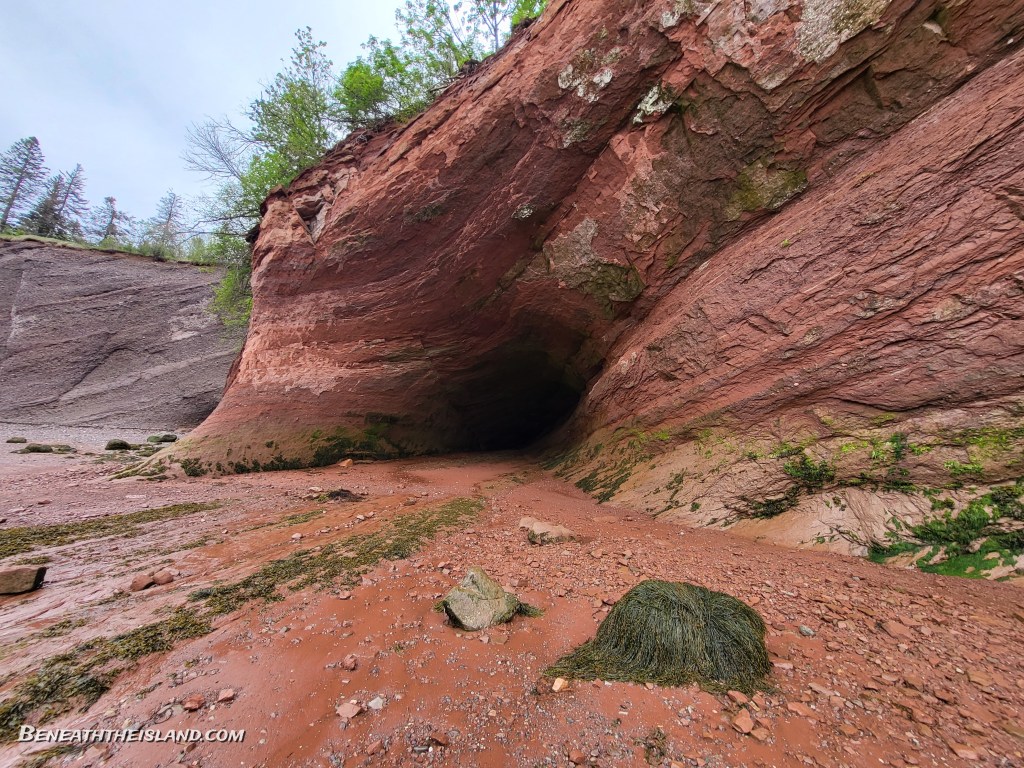
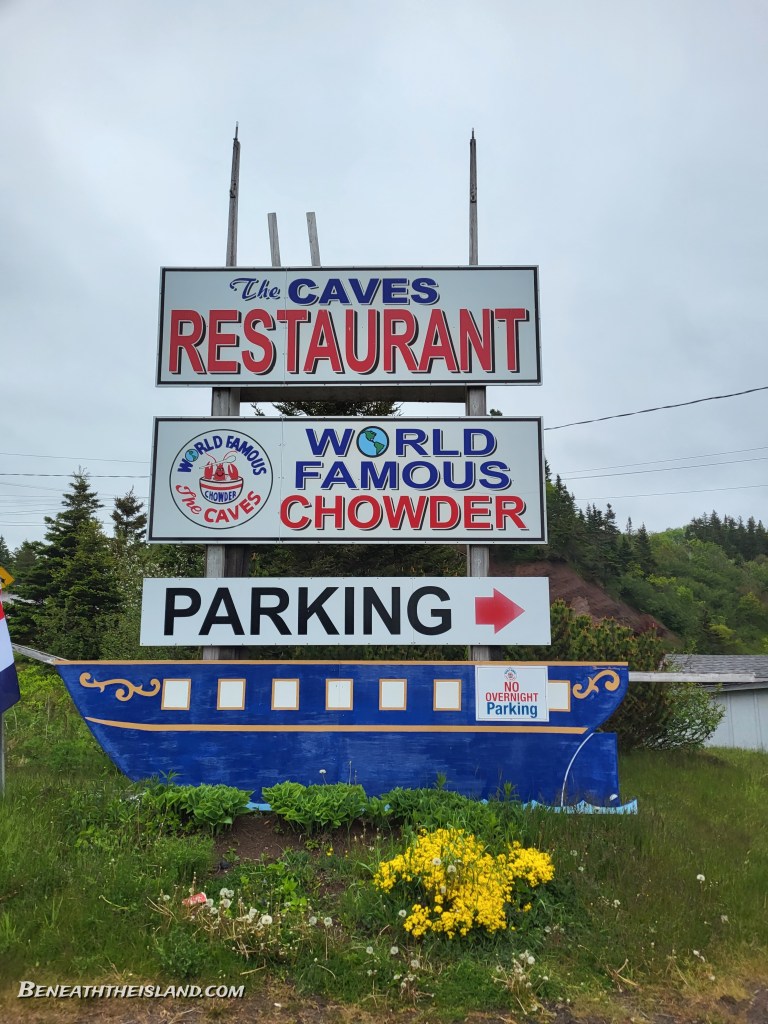
After the question mark passages were all complete I could relax. Later I was invited by my family to The Caves Restaurant in St. Martins. On the coast a hundred meters or so away from the restaurant are a few very large sandstone sea caves. I brought in my flashes and we snapped few pictures.
This was one of the most excitingly fun caving trips I’ve ever had. It was spent with some great people and only left me craving more. I now have a return trip planned and I hope to add many more surveys to the now growing folder and possibly inspire more purpose-driven caving in the area

Written by Tim English
Intro and edited by Pat Shaw
Reference:
Arseneault, S.P., Schroeder, J., Berube, D., and Albert,R. 1997. The Caves of Southwestern New Brunswick. New Brunswick Department of Natural Resources and Energy Open File 97-7.
 BENEATH THE ISLAND
Leave a comment